Every prophet warned his own generation. Except Jesus?
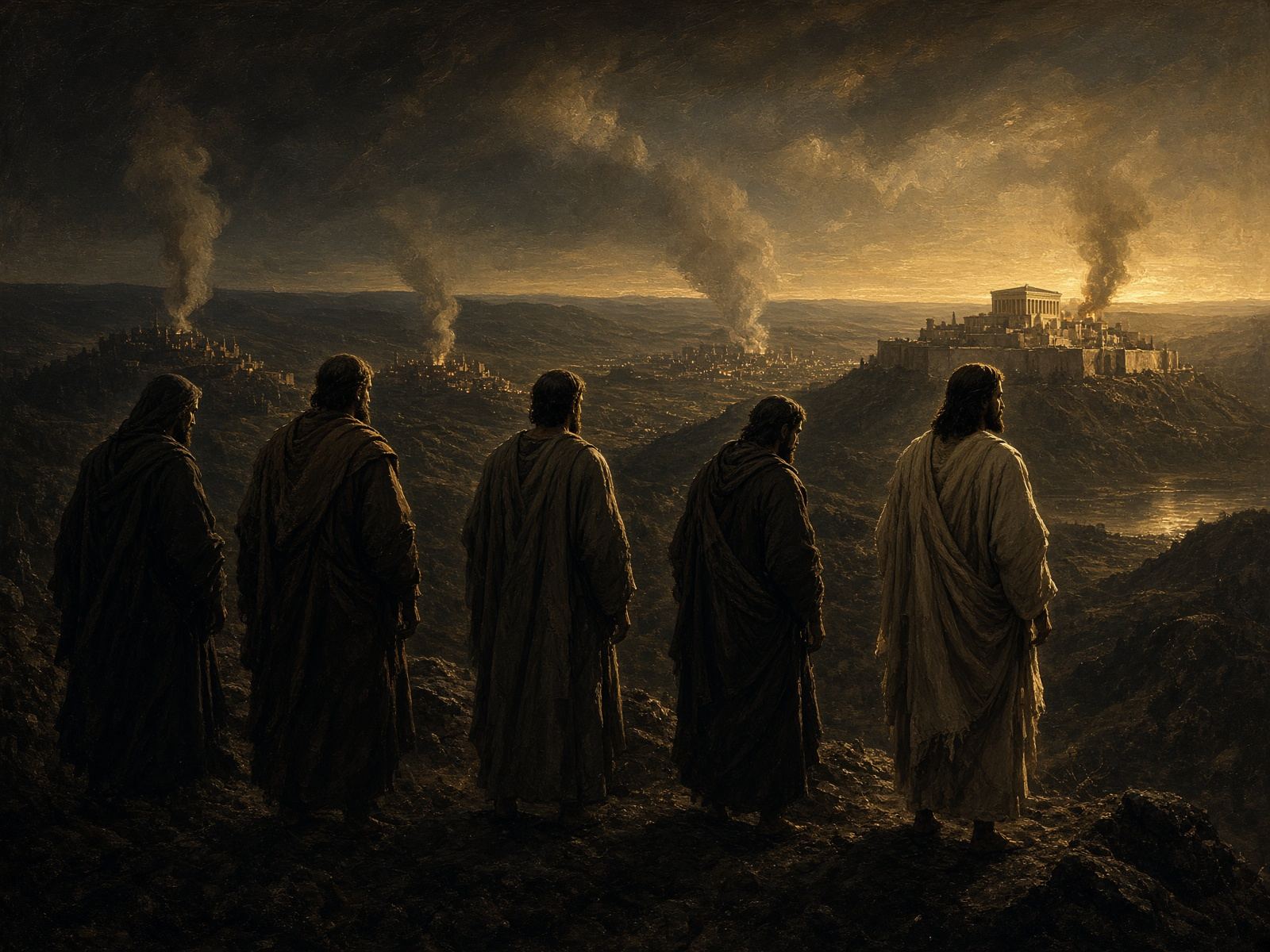
Look at the five men in this picture. Noah warned his generation, and the flood came on them. Jeremiah warned his, and Babylon came. Ezekiel warned his from the riverbank in exile. Amos warned his, and Assyria came. Nobody argues about any of that. Then Jesus stands on the Mount of Olives and warns His, and that's the one we can't accept.
Run the whole Old Testament and it's the same every time. Moses: "Your dead bodies shall fall in this wilderness" (Numbers 14:29). Them. Amos: "The end has come upon my people Israel" (Amos 8:2). The Israel in front of him. Hosea: "The days of punishment have come; the days of recompense have come" (Hosea 9:7). Micah: "Zion shall be plowed as a field; Jerusalem shall become a heap of ruins" (Micah 3:12). Jeremiah stood in the Temple gate and told them God would do to that house what He did to Shiloh (Jeremiah 7:12–14). Zephaniah announced the day of the LORD on Judah and Jerusalem. Habakkuk was told God was raising up the Chaldeans (Habakkuk 1:6). Real prophets, real people, real judgments, in their own lifetimes. We never once think the prophet was warning somebody two thousand years down the road.
Ezekiel is my favorite, because his audience tried the exact move we make. They said, "The vision that he sees is for many days from now, and he prophesies of times far off" (Ezekiel 12:27). Sound familiar? God's answer: "None of my words will be delayed any longer, but the word that I speak will be performed" (12:28). Stop taking the judgment I'm warning you about and shoving it into somebody else's future.
We get that with the prophets. Then we get to Jesus, and all of a sudden "you" doesn't mean you.
Read Matthew 23 by itself. Don't skip ahead. Jesus is talking straight at the scribes and Pharisees. Their fathers killed the prophets. "Fill up, then, the measure of your fathers" (23:32). He says He will send them prophets and wise men, and they will kill and crucify and flog them (23:34). "Truly, I say to you, all these things will come upon this generation" (23:36). Then, without taking a breath: "O Jerusalem, Jerusalem, the city that kills the prophets… See, your house is left to you desolate" (23:37–38). What did the Pharisees say among themselves? "They perceived that he was speaking about them" (21:45). They understood Jesus was speaking to them.
Then He walks out of their Temple. The disciples point at the buildings. He tells them not one stone will be left on another (24:1–2). He spends the next thirty verses telling those same men what "you" will hear and what "you" will see, and then He says it again: "Truly, I say to you, this generation will not pass away until all these things take place" (24:34).
That's the spot where we decide the generation being warned isn't the generation being warned.
So "this generation" has to become the Jewish race. Or a generation thousands of years off. Or whoever finally sees the signs. Or some wicked generation stretching from Adam to the end of time. Why? Jesus had already named His audience, their crime, their city, their Temple, and the judgment coming on them. Forty years later Rome leveled the city and the Temple. Inside that generation. Exactly like He said. He even told them to flee to the mountains of Judea when they saw Jerusalem surrounded. Would we go to Judea today?
Put Daniel and John next to it. Daniel was told, "Shut up the words and seal the book, until the time of the end" (Daniel 12:4). Sealed, because it was far off. John was told the opposite: "Do not seal up the words of the prophecy of this book, for the time is near" (Revelation 22:10). Open, because it was close. God knows how to say "far off." He said it to Daniel. He said it through Ezekiel and then rebuked the people who abused it. He didn't say it to John, and He didn't say it in Matthew 24.
I think we've made prophecy a lot harder than it is. Noah's world, Moses' generation, Israel under Amos and Hosea, Jerusalem under Micah and Jeremiah, Judah under Zephaniah and Habakkuk. Every time, the people hearing the warning were the people facing the judgment. Jesus didn't break that pattern. We did.
"You" meant you. "At hand" meant at hand. "Shortly" meant shortly. And when Jesus said "this generation," He meant the one standing in front of Him.
Every prophet warned his own generation. Jesus wasn't the exception. He was the fulfillment of the pattern.