Is the modern State of Israel the same thing as biblical covenant Israel?
This question generates more heat than light, so let me start with a distinction that most of the shouting skips right past. Saying the modern State of Israel is not the same thing as biblical covenant Israel is not saying modern Jewish people have no historical connection to ancient Jews. Of course they do. Those are two different claims, and confusing them is how a theological question gets turned into an accusation. Nobody here is questioning anyone's ancestry. The question is what the New Testament says defines God's covenant people after Christ.
Start where Paul starts. "Now the promises were made to Abraham and to his offspring. It does not say, 'And to offsprings,' referring to many, but referring to one, 'And to your offspring,' who is Christ" (Galatians 3:16). Paul builds an argument on a singular noun. The promise was made to Abraham and to one Seed, and that Seed is Christ. Not a nation, not a bloodline, not a future political entity. Christ. Every promise God made to Abraham runs through Him, which is why Paul can say elsewhere that "all the promises of God find their Yes in him" (2 Corinthians 1:20). If the promises belong to Christ, then the only question left is who belongs to Christ.
Paul answers that too, thirteen verses later: "And if you are Christ's, then you are Abraham's offspring, heirs according to promise" (Galatians 3:29). Read the order carefully. You are not Christ's because you are Abraham's seed. You are Abraham's seed because you are Christ's. Union with the Messiah is the thing that makes someone an heir. That is Paul's definition, and he wrote it to Gentiles who had never set foot in Jerusalem.
Biblical Israel lived under a covenant with a specific shape: circumcision, a temple, daily sacrifices, a Levitical priesthood, tribal land inheritance, and the Torah as national law. Then Christ came, and the New Testament writers say plainly what happened to that arrangement. "In speaking of a new covenant, he makes the first one obsolete. And what is becoming obsolete and growing old is ready to vanish away" (Hebrews 8:13). The modern State of Israel, founded in 1948, has no temple, no sacrifices, no functioning Levitical priesthood, and no verifiable tribal inheritance. Whatever it is, and it is a real nation with real people, it is not the covenant structure Moses established. That is not an insult. It is a description.
Now to the hardest part, because Paul himself raised it. "Not all who are descended from Israel belong to Israel" (Romans 9:6). Paul is not a Gentile outsider making that claim; he is a Hebrew of Hebrews, and he says that physical descent and covenant membership were never the same thing, even in the Old Testament. "It is not the children of the flesh who are the children of God, but the children of the promise are counted as offspring" (Romans 9:8). John the Baptist said the same thing to the Pharisees before Paul ever wrote a letter: "do not presume to say to yourselves, 'We have Abraham as our father'" (Matthew 3:9). Paul then goes further and redefines the word itself: "no one is a Jew who is merely one outwardly… But a Jew is one inwardly, and circumcision is a matter of the heart, by the Spirit, not by the letter" (Romans 2:28–29).
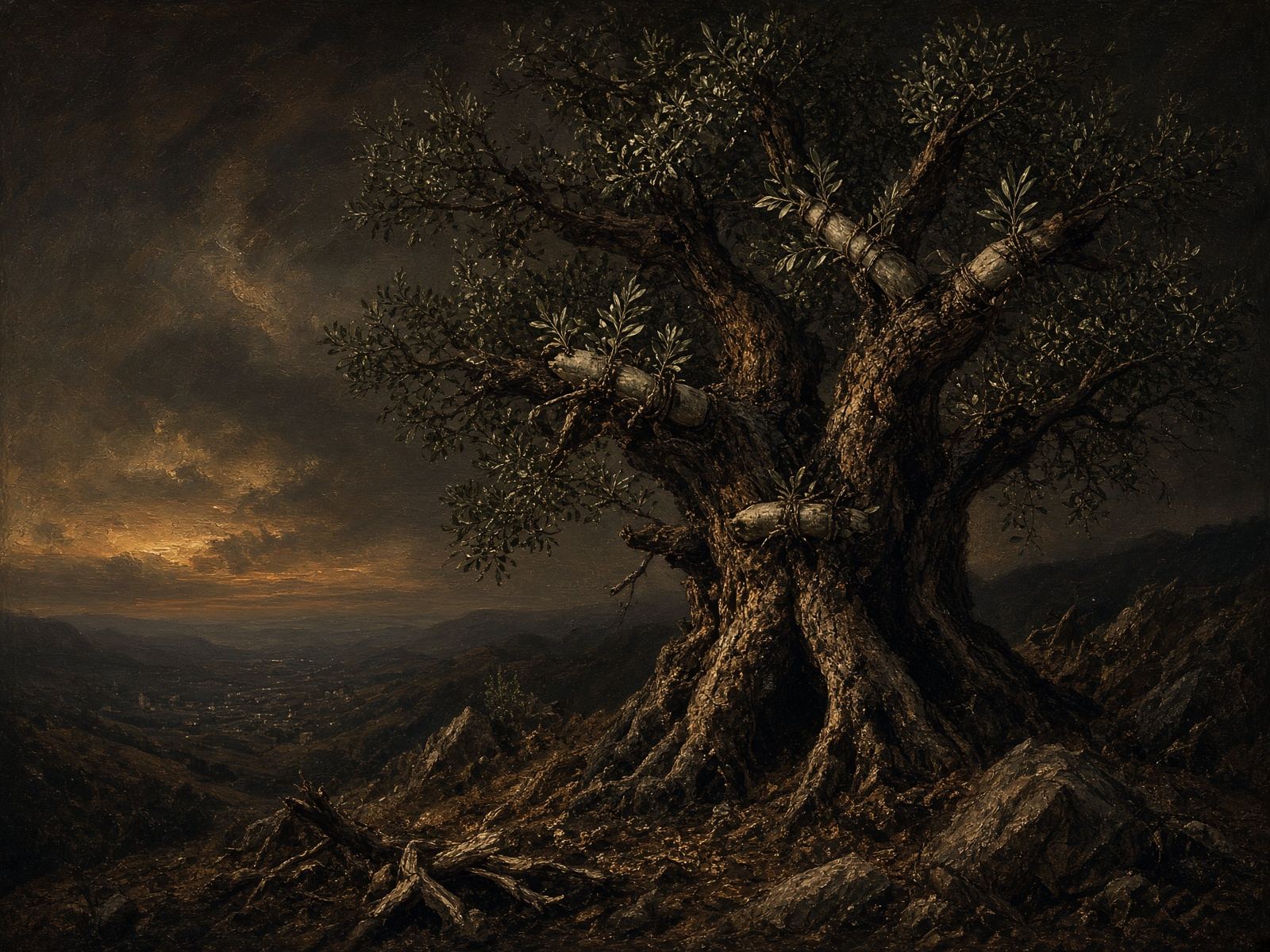
This is where someone will say, "But Romans 11! The gifts and the calling of God are irrevocable! All Israel will be saved!" Good. Read the whole chapter, because it is the strongest text for my position, not against it. Romans 11 describes one olive tree. Not two. Unbelieving branches were broken off "because of their unbelief" (11:20), believing Gentiles were "grafted in among the others" (11:17), and the natural branches are welcomed back on one condition: "if they do not continue in their unbelief, [they] will be grafted in" (11:23). The way back into the tree for a Jew is the identical way in for a Gentile. Faith in the Messiah. Then Paul says "in this way all Israel will be saved" (11:26), and the phrase is "in this way," not "and then, at some later date." God has not abandoned Jewish people; the root still stands and the door is open, and that is exactly what "the gifts and the calling of God are irrevocable" (11:29) means. What Romans 11 does not do is create a second covenant people on a separate track with a separate destiny. It describes one tree, one root, one way in.
Ephesians 2 closes the case. Christ "has made us both one and has broken down in his flesh the dividing wall of hostility… that he might create in himself one new man in place of the two, so making peace" (Ephesians 2:14–15). One new man. Not two peoples with two programs. Peter takes the very titles God gave Israel at Sinai and hands them to a church full of Gentiles: "you are a chosen race, a royal priesthood, a holy nation, a people for his own possession" (1 Peter 2:9, quoting Exodus 19:6). And Paul tells the Galatians which Jerusalem is their mother: "the Jerusalem above is free, and she is our mother" (Galatians 4:26). Grafted into that city, or not.
So the question was never whether Jewish ancestry continues. It does, and Jewish people who trust the Messiah are grafted right back into their own tree. The question is theological. After Christ, what defines membership in God's covenant people? Nationality? Or union with the Messiah?
Don't take my word for it. Take the texts above and test them like a Berean.